ActivePure Journal
The Hidden Life of Household Dust
Dust is more than a light layer on a shelf. It can carry particles from people, pets, fabrics, cooking, outdoor air and biological material. Learn why dust returns so quickly and how active purification supports cleaner air and surfaces.

Dust looks harmless - a light layer on a shelf, a small cloud when you shake out a rug, or a fine coating that seems to return only hours after cleaning.
But household dust is not just dead skin or fabric fibres. It is a changing mix of particles from people, pets, fabrics, cooking, outdoor air and everyday movement. Some of it settles on surfaces. Some of it becomes airborne again. That is why dust is not only a cleaning issue - it is also part of the indoor air story.
Dust is more active than it looks
Dust may look still when it settles on a table, shelf or floor, but it is constantly being created and moved around.
Household dust can include:
- Skin flakes and hair
- Fabric fibres
- Pet dander
- Pollen
- Mold spores
- Dust mite particles
- Cooking residue
- Outdoor soil and particles
- Small particles from daily activities
This mix changes depending on the people, pets, surfaces and activities inside the space. It can also include particles that enter from outdoors through doors, windows, shoes, clothing and ventilation.
Why dust comes back so quickly after cleaning
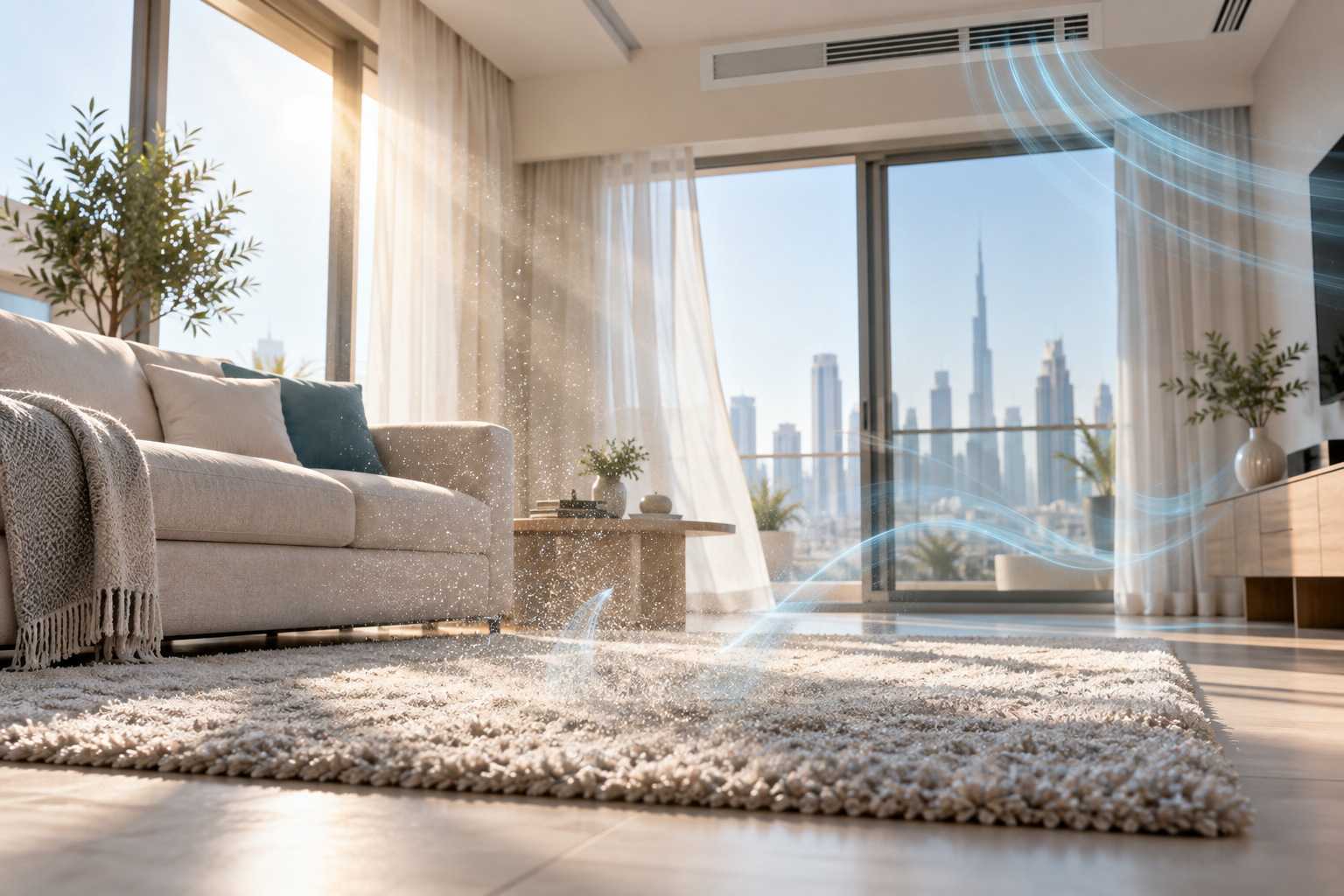
If dust returns soon after cleaning, it does not always mean the cleaning failed. Dust is continuously generated and redistributed by normal daily life.
Simple movement can lift settled particles back into the air. Walking across a room, opening doors, using soft furnishings, shaking out fabric, vacuuming, cooking or running the AC can all disturb particles.
Once airborne, some particles may circulate for a while before settling again on another surface. This is why dust feels like a repeating cycle: it forms, moves, settles and then gets disturbed again.
Dust is also connected to indoor air
Dust is not only something you wipe away from surfaces. It is connected to the air moving through the room.
Some particles are large enough to settle quickly. Others can stay suspended longer and move with airflow. In air-conditioned spaces, indoor air may recirculate through rooms and vents, carrying particles from one area to another.
This matters because many homes and workplaces are sealed for comfort. When indoor air keeps circulating, dust and other particles may continue moving unless they are controlled through cleaning, ventilation, filtration and active purification.
Filtration helps, but dust does not always wait for the filter
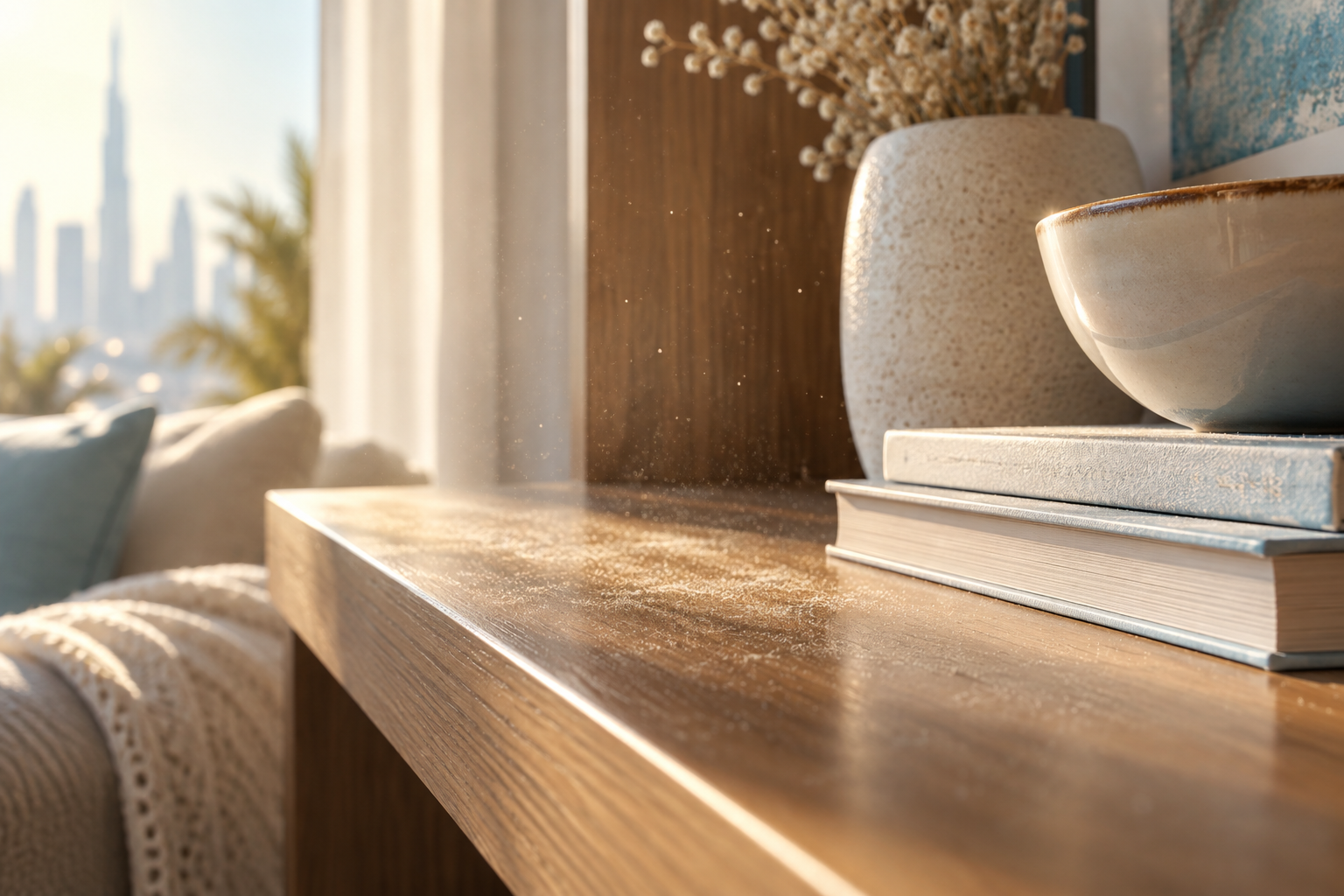
Standard filtration can help capture particles when air passes through a filter. This is useful, but it depends on particles reaching the unit or ventilation system.
A lot of dust settles on furniture, floors, fabrics and other surfaces before it ever reaches a filter. Some of it can later become airborne again through movement or airflow.
That is why indoor air care should not be seen as only one action. Cleaning, reducing dust sources, improving airflow and supporting the whole room environment can all work together.
How active purification changes the approach
Active purification technologies work differently from systems that only wait for air to pass through a filter.
ActivePure systems are designed to work continuously in the background, supporting both air and surfaces throughout the room. This makes them part of a more complete indoor air strategy for homes, offices, clinics, hospitality spaces and commercial environments.
The goal is not to replace cleaning. Regular cleaning still matters. The goal is to support the indoor environment between cleaning cycles, while people continue living and working normally.
A better way to think about dust
Dust should not be treated as only a cosmetic problem. It is a sign of how active indoor spaces really are.
Every room has movement, airflow, people, fabrics, surfaces and particles. Dust is part of that hidden activity.
By understanding how dust forms and moves, it becomes easier to see why indoor air deserves attention — and why continuous purification can play an important role in supporting cleaner, fresher indoor spaces.
ActivePure UAE
Find the right purification solution for your space.
Explore our products or speak with the ActivePure UAE team.
Helpful Answers
Frequently Asked Questions
No. Household dust can include skin flakes, hair, fabric fibres, pet dander, pollen, mold spores, dust mite particles, cooking residue, outdoor soil and particles from everyday activities.
Dust is constantly being generated and moved around by normal activity. Walking, opening doors, using soft furnishings, cooking, vacuuming and running the AC can all disturb settled particles and move them through the air again.
Filtration can help capture particles when air passes through a filter, but many dust particles settle on surfaces before reaching the filter. This is why cleaning, source control, ventilation, filtration and active purification can all play different roles.
No. Regular cleaning is still important. Active purification supports the indoor environment between cleaning cycles by working continuously in the background to help support air and surfaces.
ActivePure systems can support indoor environments in homes, offices, clinics, hospitality spaces and commercial settings where air is continuously shared and circulated.