ActivePure Journal
Airborne Pathogens 101: What They Are, and Why They’re Everywhere
Pathogens are part of everyday indoor life. Learn how bacteria, viruses, and fungi move through air, dust, droplets, and shared surfaces — and why continuous purification matters.

Pathogens sound like something that only belongs in hospitals or laboratories, but they are part of everyday life. Bacteria, viruses, and fungi exist around us all the time — in the air, on surfaces, on dust, and wherever people share space.
Most of the time, this is completely normal. The point is not to make indoor spaces feel unsafe. The point is to understand how easily microscopic material can move indoors, especially in closed rooms where air is recycled and surfaces are touched throughout the day.
What Are Airborne Pathogens?

Pathogens are microorganisms that can include bacteria, viruses, and fungi. They are not rare or unusual - they exist in the environments we live and work in every day. Some are harmless, while others may contribute to illness when conditions allow them to spread.
Indoors, pathogens can travel in several ways. They may attach to dust, move in respiratory droplets, settle on shared surfaces, or circulate with air that passes through rooms and air-conditioning systems. This is why indoor air quality is not only about smell, comfort, or visible dust. It also includes the microscopic material moving quietly in the background.
The goal is not to remove every microorganism from a space. That is not realistic. The practical goal is to reduce the overall load indoors and make the environment less supportive of unwanted buildup over time.
Why Indoor Spaces Give Pathogens More Chances to Move
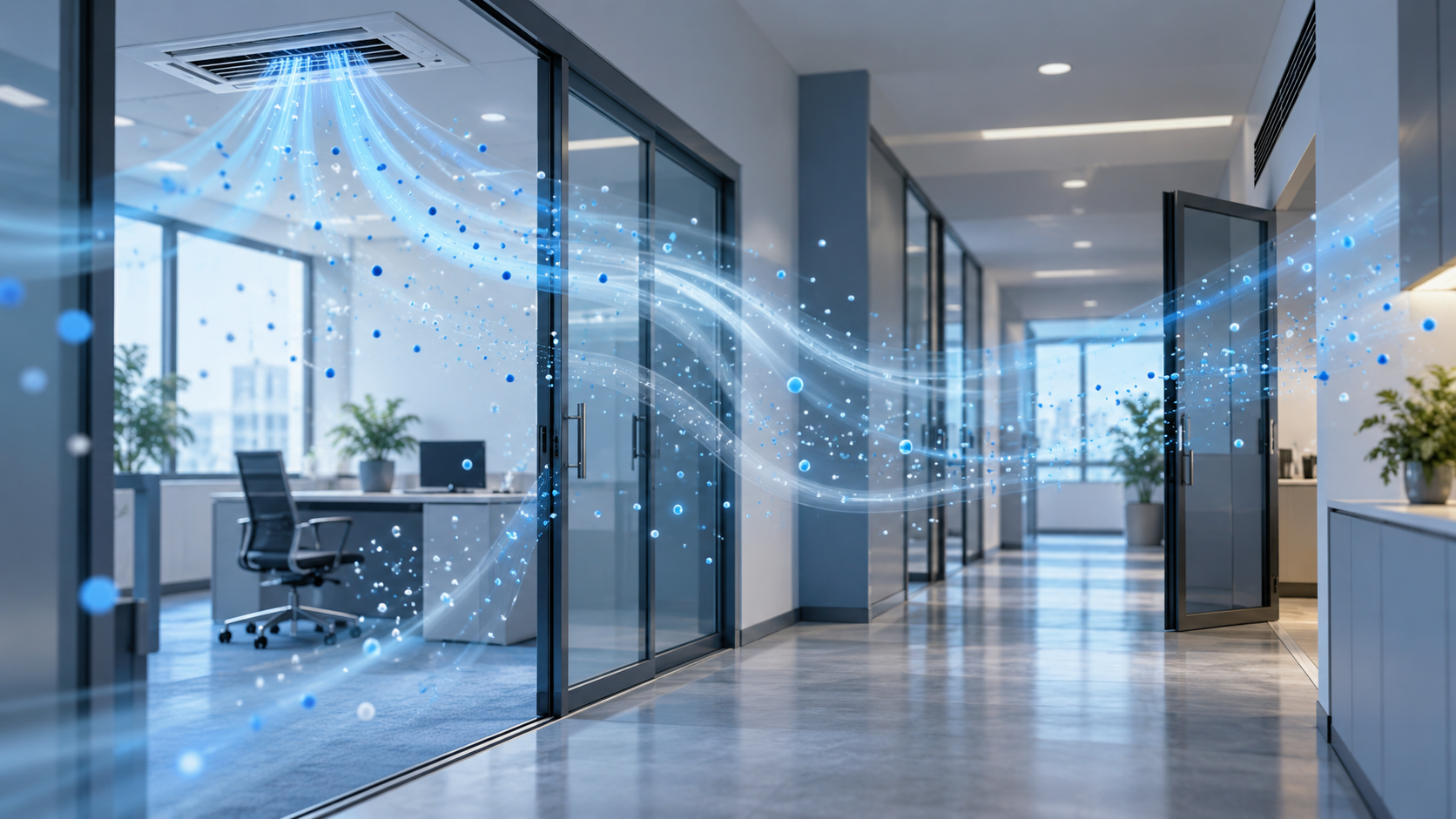
Outdoor air has natural dilution. Wind, sunlight, open space, and constant air movement help disperse particles. Indoor spaces work differently. Air may recirculate through the same rooms, doors open and close, people touch the same surfaces, and particles can remain suspended or settle depending on airflow and humidity.
This is especially relevant in homes, offices, clinics, gyms, schools, and hospitality spaces - anywhere people spend long periods together. Shared indoor environments create more opportunities for particles to move from air to surfaces and from surfaces back into the room.
Good ventilation and filtration are important parts of indoor air management. Health agencies also recommend cleaner air strategies such as increasing airflow and using air cleaning where appropriate, especially in indoor spaces where respiratory viruses can spread through the air CDC.
Surfaces and Air Are Connected

Indoor air and indoor surfaces are not separate worlds. Dust settles on desks, phones, handles, fabrics, and counters. Movement in the room can disturb those particles again. A door opening, an AC unit running, or people walking through a space can all redistribute tiny material. This is why cleaning surfaces matters, but it is also why cleaning alone is not the full picture. A surface can be wiped, but air continues to move. Air can be filtered, but particles can settle before they ever reach a filter. Indoor quality is best thought of as a continuous cycle: air, surfaces, movement, and maintenance all working together.
The EPA describes source control, ventilation, filtration, and air cleaning as important strategies for reducing biological contaminants indoors EPA.
Why Continuous Purification Matters
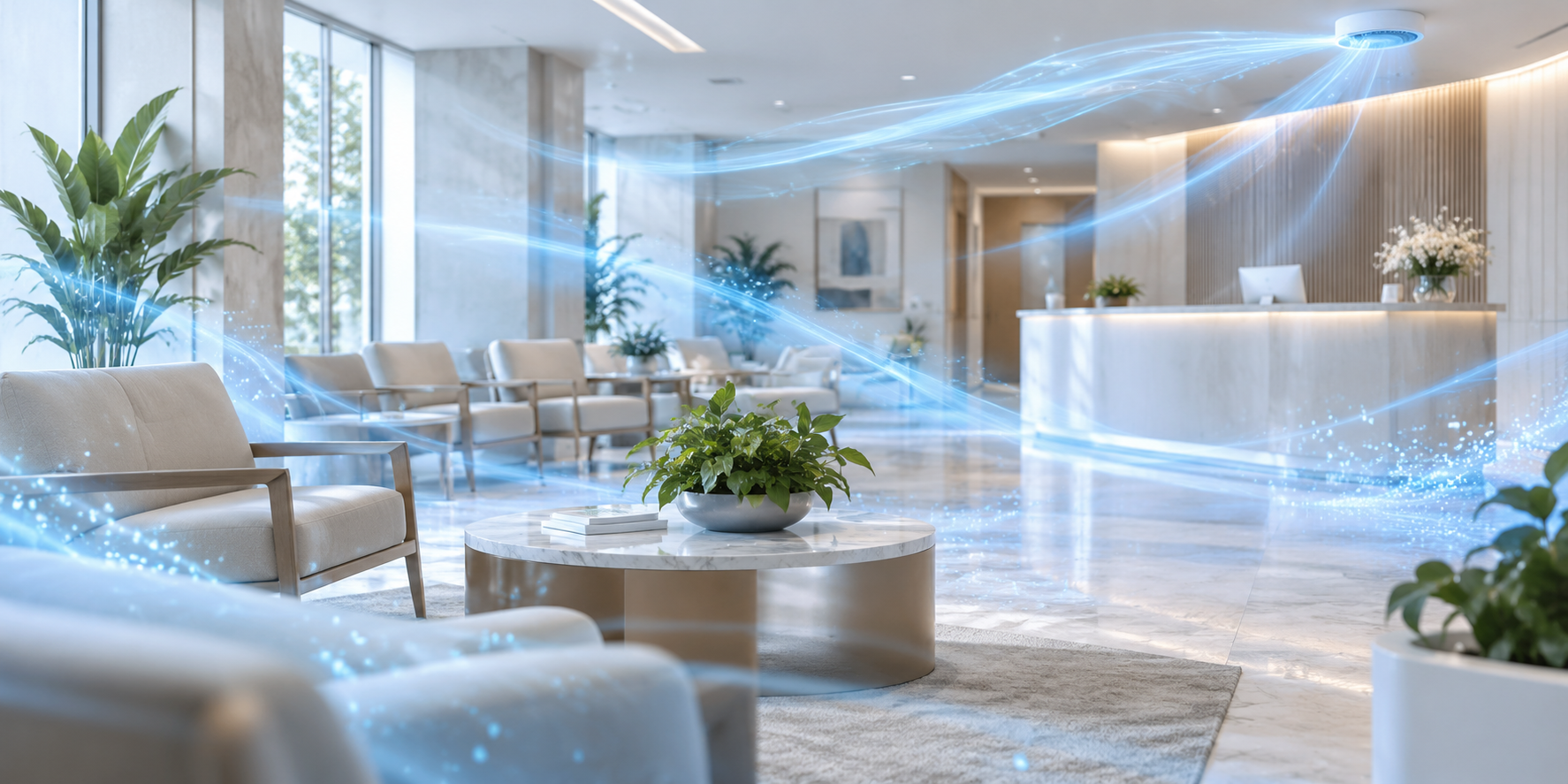
A one-time cleaning routine helps, but indoor air does not pause between cleanings. People enter, air circulates, surfaces are touched, and particles continue to move throughout the day. This is why air quality should be seen as an ongoing background task.
Standard filtration works when air passes through a filter. Active purification is designed differently: it works continuously in occupied spaces, helping address air and surfaces rather than waiting only for particles to reach a unit.
This kind of continuous approach is especially useful in environments where people share air for long periods - homes, offices, waiting rooms, hospitality spaces, and healthcare settings. It adds another layer to ventilation, cleaning, and filtration, helping reduce microbial load over time without requiring people to think about it every hour.
ActivePure UAE
Find the right purification solution for your space.
Explore our products or speak with the ActivePure UAE team.
Helpful Answers
Frequently Asked Questions
No. Pathogens and microorganisms are part of everyday environments. Many do not cause problems. The concern is not their mere presence, but how they spread, accumulate, and interact with people in indoor spaces.
Yes. Some bacteria, viruses, and fungi can move through air, droplets, dust, and ventilation patterns. Indoor spaces with limited fresh air or high recirculation may give particles more opportunity to remain present.
Surface cleaning is important, but it is only one part of indoor air quality. Air movement, filtration, ventilation, humidity, and continuous purification all play roles because particles can move between air and surfaces.
ActivePure systems are designed to work continuously in indoor spaces, supporting air and surface purification over time. They should be used as part of a broader indoor air-quality approach that can include cleaning, ventilation, and filtration.